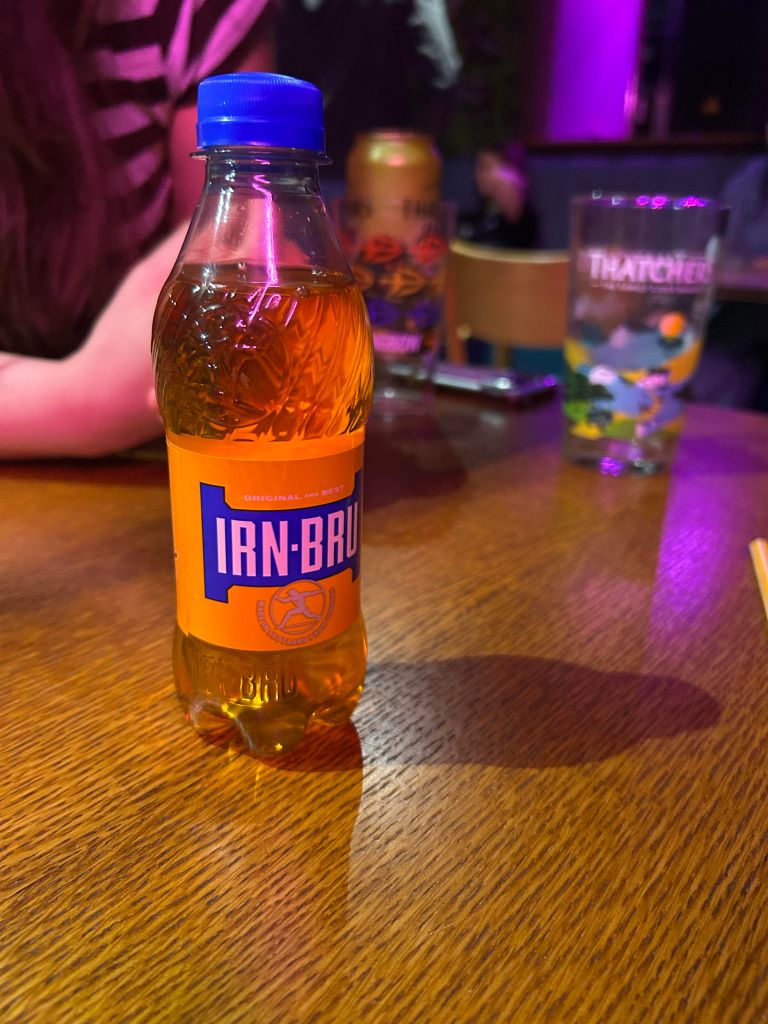
If you find yourself in Scotland for, let’s say, more than thirty minutes, there is no doubt your eyes will land on a mysterious, bright orange and blue bottle of liquid labeled, in big letters, “IRN BRU”.
It can come in a can, bottle, or glass, but it’s always the same fluorescent orange color, marked with the catchphrase, “Made in Scotland from Girders” (rusty iron), featuring a ripped, masculine man carrying the big “B” on his back, like Atlas shouldering the World.
Here’s some things to note about Irn Bru:
1. It is Scotland’s most popular soft drink
2. It is not made from Iron, nor actually brewed.
3. It is definitely not orange flavored.
4. If you are from America, there’s a high chance you won’t like it at all.
5. If you are from America, do not point out the distinctly bubblegum flavor of the drink, because bubblegum has nothing to do with Irn Bru.
.
.
.
.
Reader, it is Bubblegum flavored soda.
At least, that’s exactly what an American pallet perceives it to be. It’s for this reason that Americans tend to find themselves a little startled when they first drink Irn Bru, if not completely put off. Make no mistake, I actually enjoy Irn Bru, but only because I can, personally, Get Down with Bubblegum like that.
Fascinatingly, this strange cultural phenomenon is both easily explainable, and can be directly compared to one that occurs with America’s own beloved drink: Root Beer.
Quite often, individuals in the U.K find themselves quite put off by the flavor of Root Beer, noting specifically a distinct “medicinal” taste. This is really the key aspect here, as it’s speculated that medicine lies at the core of this phenomenon. See, the Sassafras, Herbal, and Molasses flavors found in Root Beer are almost identical to those found in common U.K cough syrups and other children’s medicines. Similarly, the “girders” part of Irn Bru’s flavoring matches quite closely with the bubblegum flavoring typically found in American cough syrups and Children’s amoxicillin. In both cases, the flavors are not commonly consumed in other contexts, causing both an unfamiliarity and a negative childhood connotation with the respective tastes.
So, Scots drink their cough syrup carbonated, and we mix ours with ice cream. Pick your poison!
As an enthusiast of both beverages and weird psychological phenomena, I find this quite fascinating.
Here’s a tiny bottle of Irn Bru that my Non-Scottish trivia team received at the Scottish-themed pub quiz as a consolation prize for coming in dead last:
Back to our regularly scheduled programming of what I’ve actually been doing in Scotland:
I took a lovely day trip to Edinburgh–courtesy of my study abroad program!
It was incredible to return to Edinburgh seven years later, after having spent two weeks at the Fringe Festival here with my High School drama group in 2019. I wasn’t sure how accurately my 14-year-old self remembered Edinburgh, or how much the city would’ve changed since then, but I was pleasantly surprised by how familiar it felt. While I’m certainly no expert yet, Edinburgh has a certain feel and excitement to it that makes it, so far, one of my favorite places in Scotland.
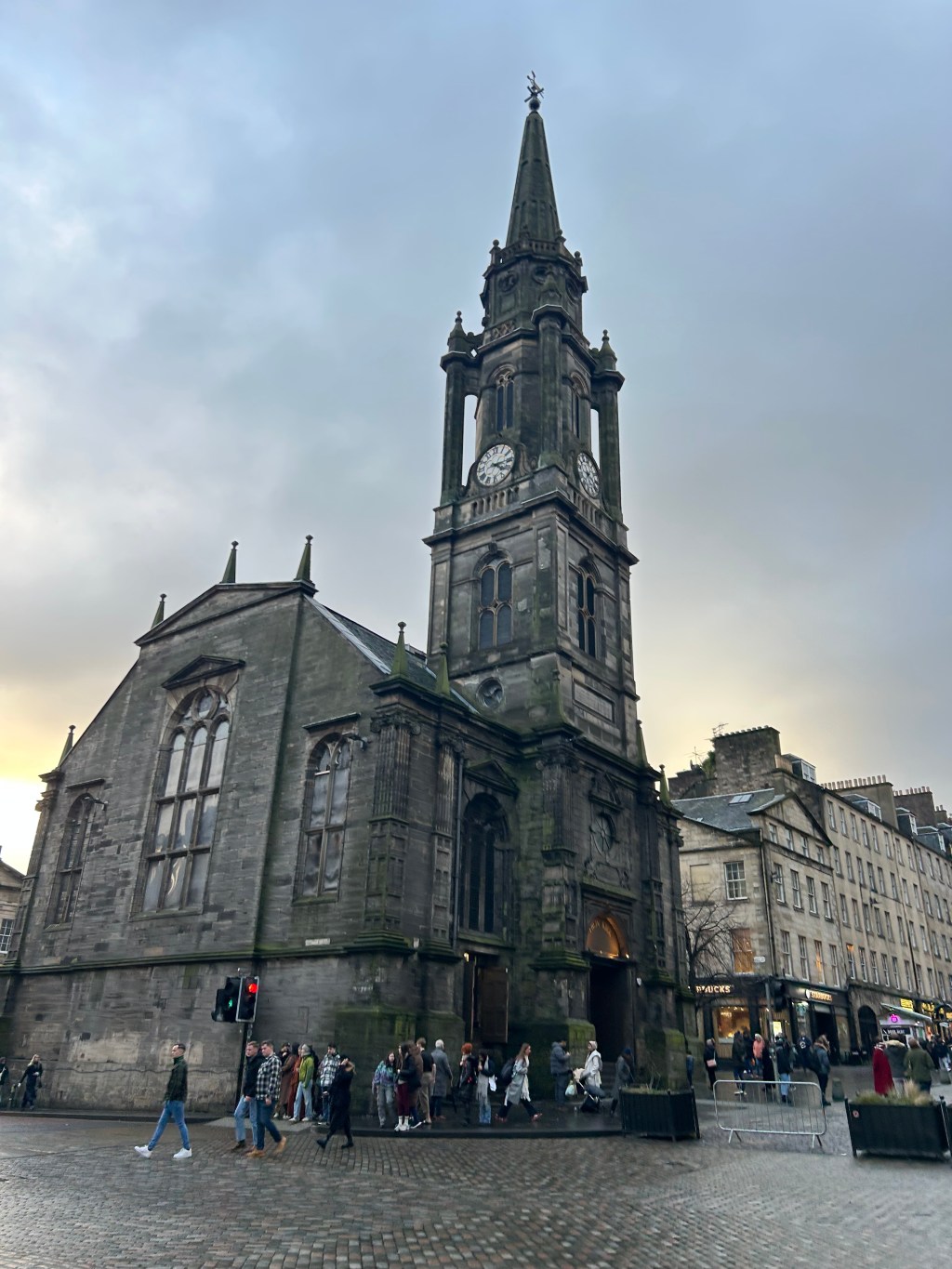
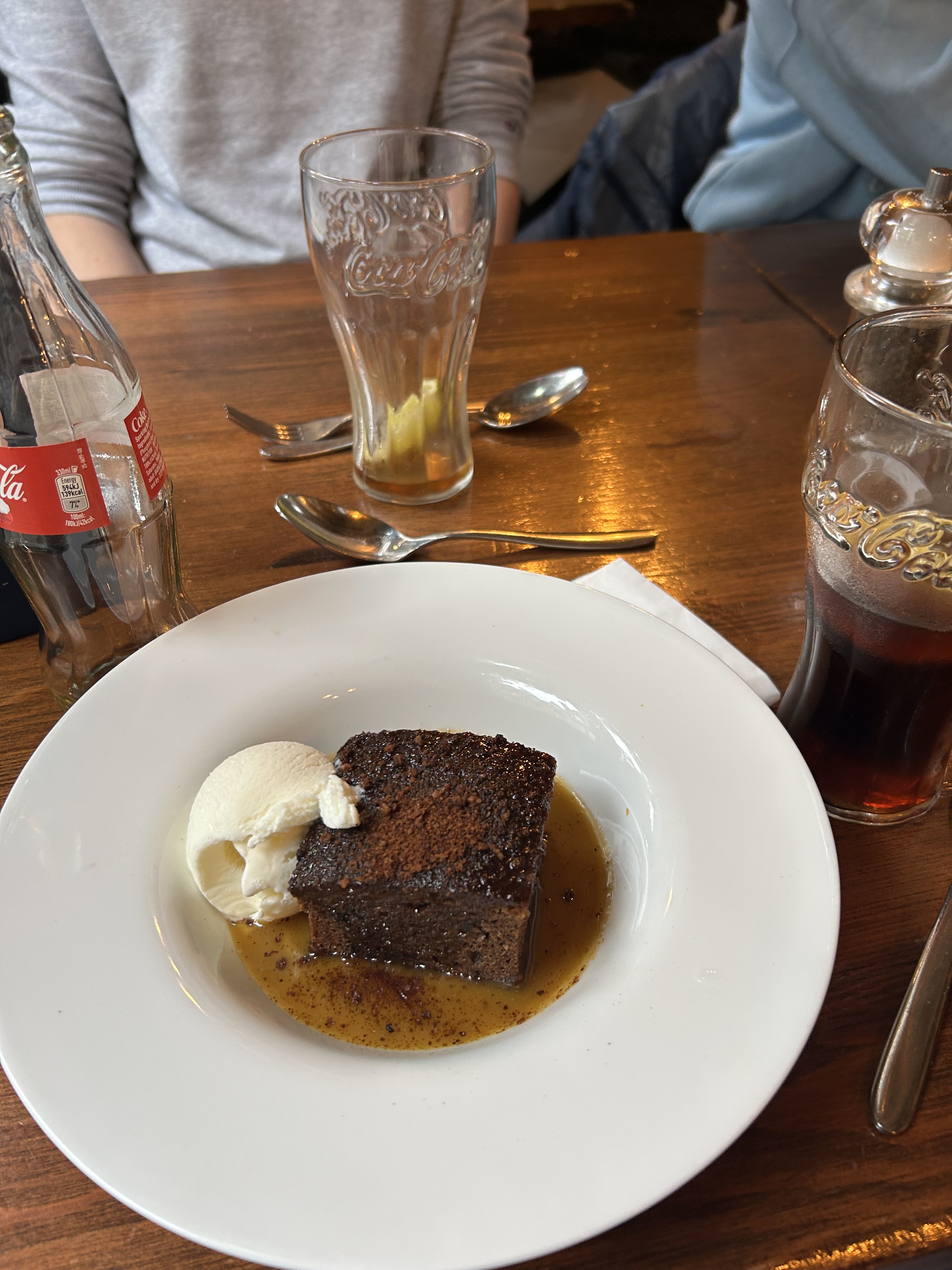
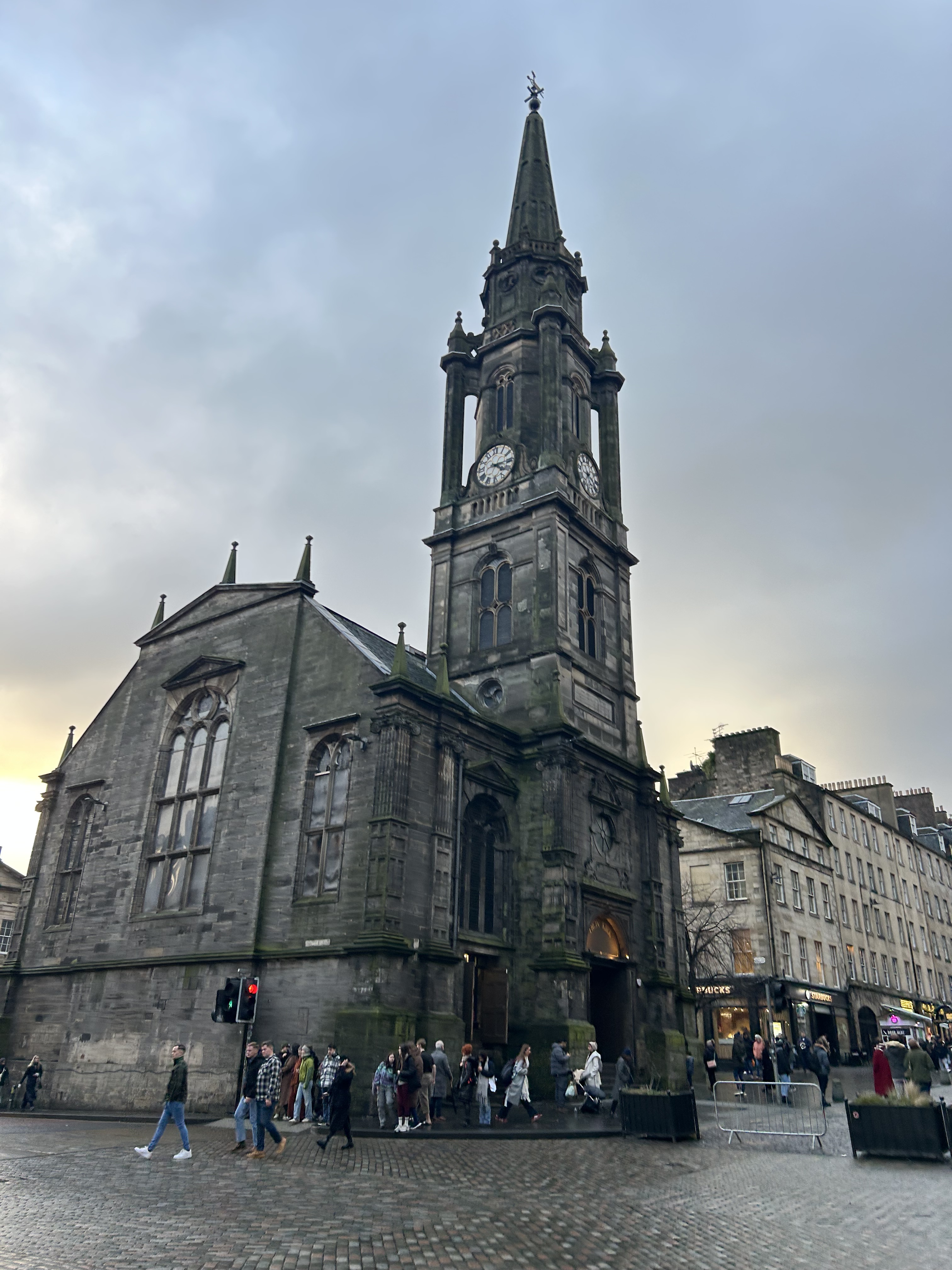
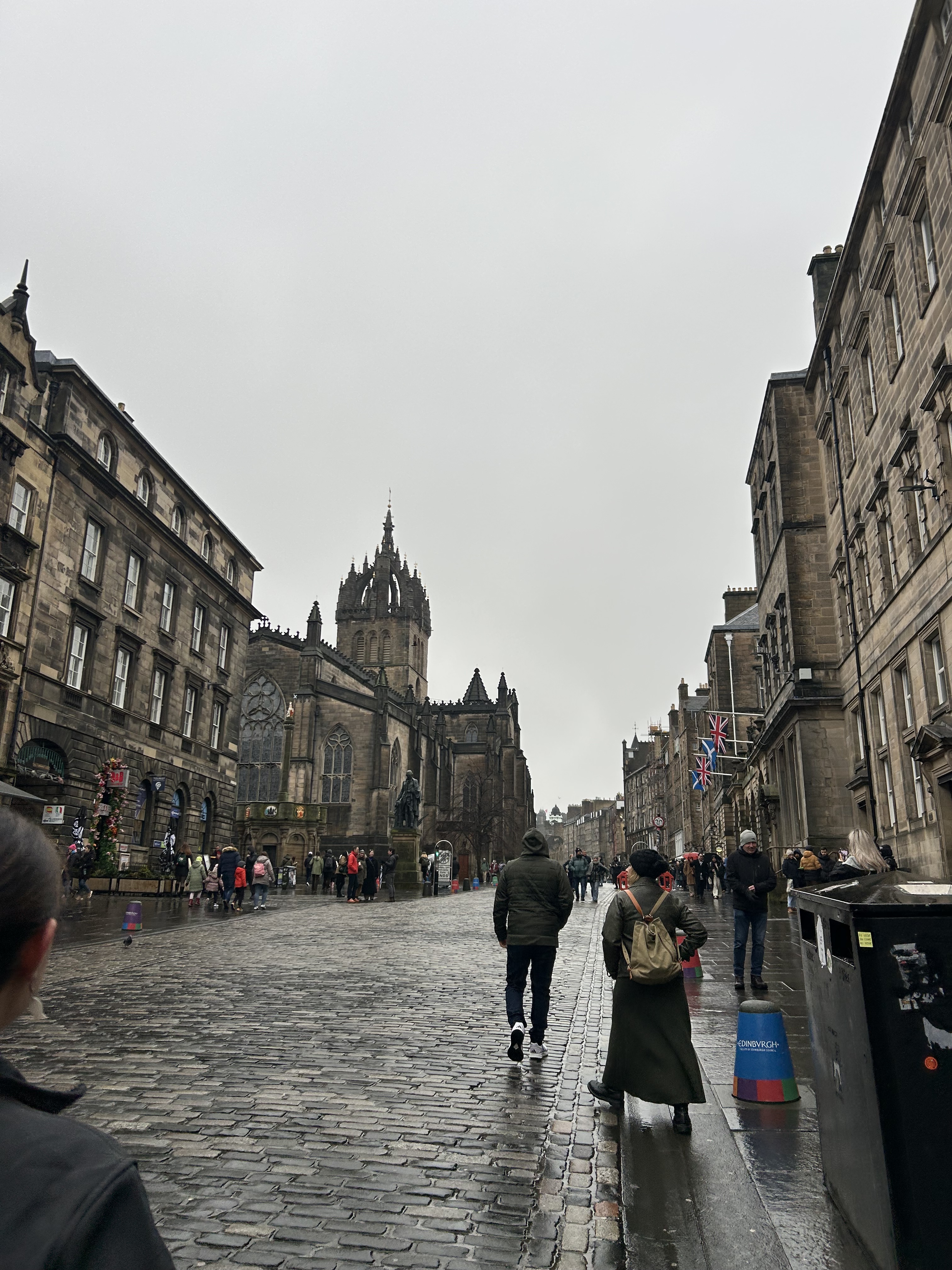
Our day included a tour of Edinburgh’s Old Town (ironically, far more new than Edinburgh’s “new town”), a delicious lunch at Howie’s on Victoria Street (featuring some delectable Sticky Toffee Pudding!!), and an afternoon of exploring the famous Edinburgh Castle (constructed on top of an inactive Volcano!).
By far the highlight of the day was our lovely, Polish guide, Sonia, who gave us, simultaneously, the darkest and funniest tour of Edinburgh possible. Truly, if the tour guide business gets rough, Sonia has a promising career in stand-up comedy ahead of her–I was cracking up the entire time she explained the dark history of Edinburgh’s School of Anatomy and the “dead body lasagna” that makes up certain parts of Edinburgh’s green spaces. For reference, the hundreds of epidemics, serial killings, and witch trials in the city called for some revolutionary engineering to be done in the business of mass graves and body stacking. Lasagna.
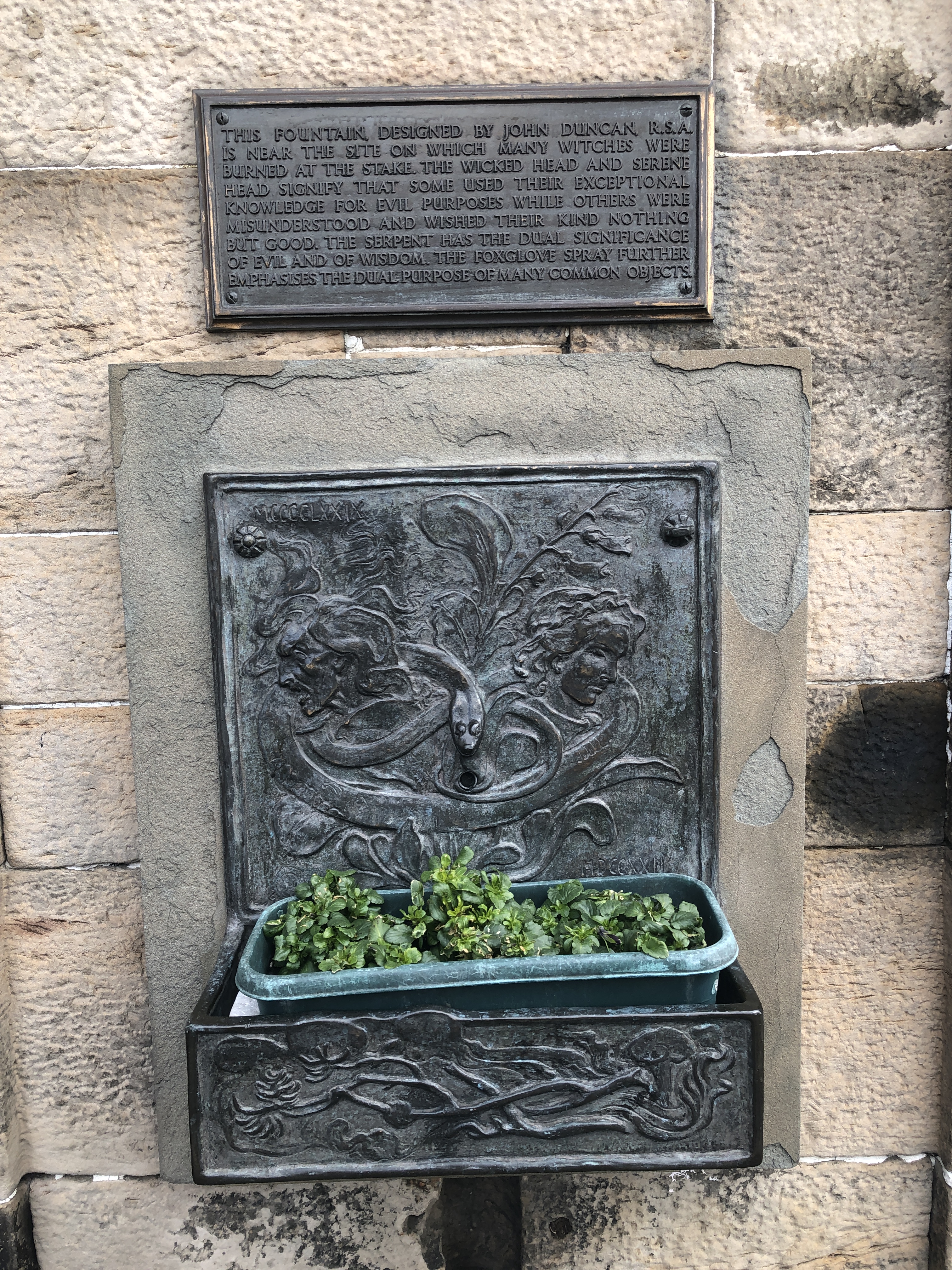
Learning about Scotland’s Witch Trials, a subject completely foreign to me, was fascinating. While Salem’s own trials in the U.S resulted in the gruesome deaths of 19-25 individuals, the Witch executions completed in Scotland are estimated to be anywhere from 6-8 thousand total. The Witchcraft Act that resulted from this mass hysteria has continued to be in effect for centuries, even leading to the arrest of one Helen Duncan in the 1940s, whose seances inexplicably revealed to her verified, top secret information regarding the Royal Army in World War II. Was she a spy or a real clairvoyant? Either way–what a woman.
Walking around Edinburgh after the tour, it was interesting to note how roots in a Witchcraft-based history impacted the city’s culture. There were shops, statues, and imagery all around that reflected both the pro and anti sides of the practice, created a somewhat haunting effect in a, generally, cheery city.
We shouldn’t worry, though. As Sonia pointed out to us, the mass murder of thousands of women in the 16th century is no longer an issue, as parliament issued a formal apology for the events in March of 2022–a “gift” for International Women’s Day.
Misogyny solved!
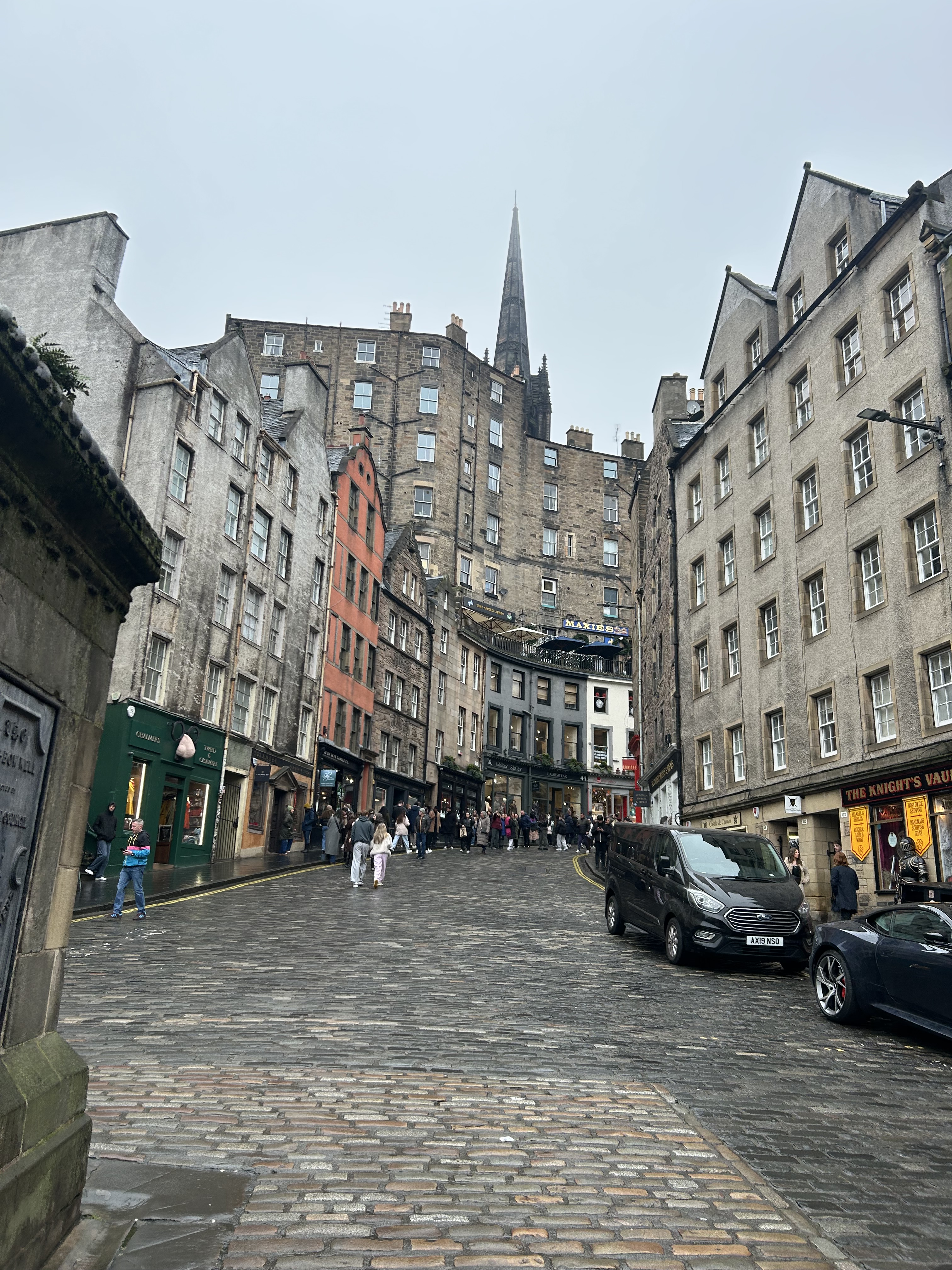
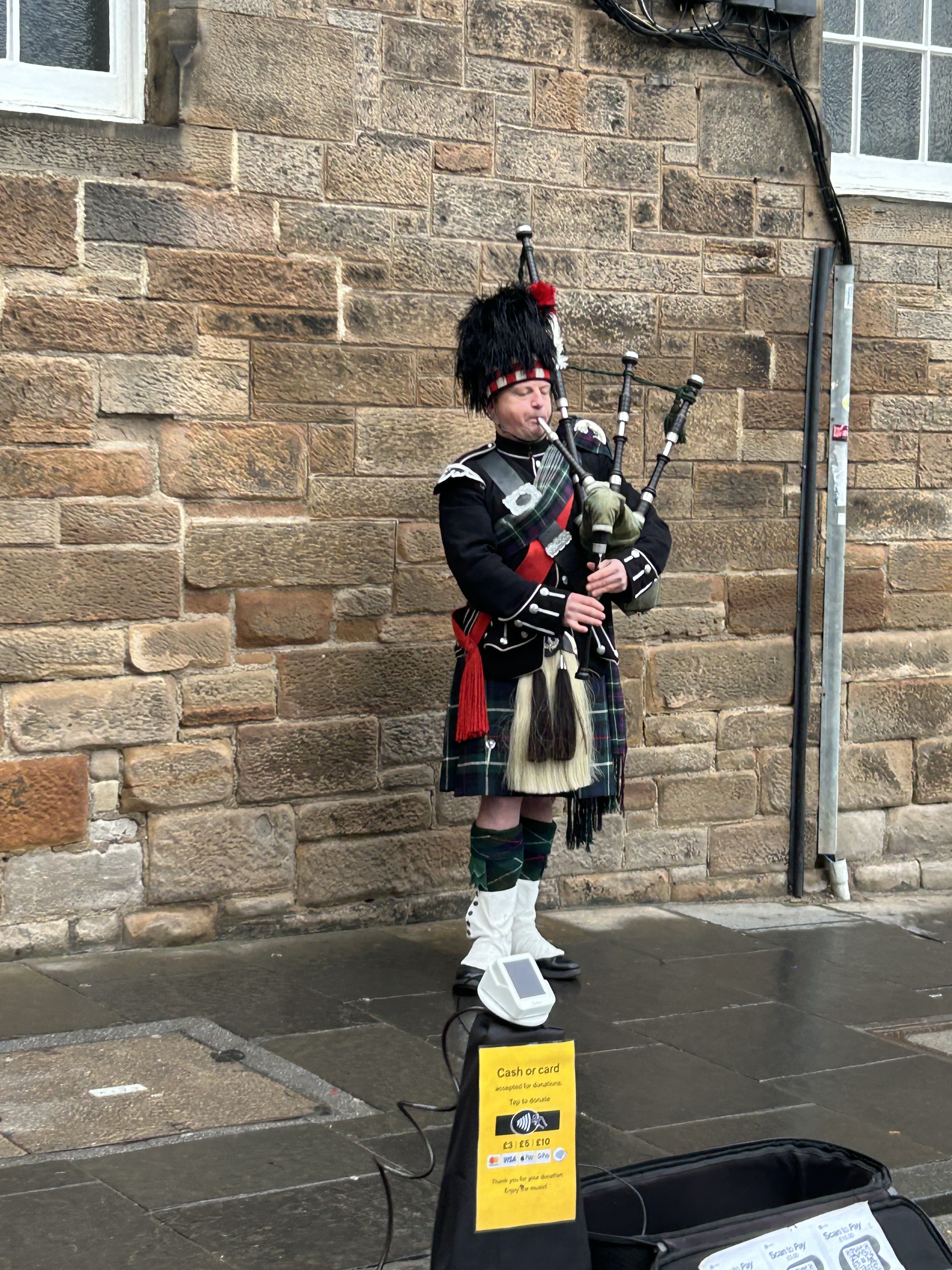
After our tour, we spent several hours exploring the city’s centerpiece–Edinburgh castle. While this was my second time visiting the Castle, I still feel as if I haven’t seen all of it quite yet. Edinburgh Castle is unique in its massive, sprawling size, making it feel almost more of a small town center, rather than one singular structure. The castle is full of interesting military museums, prisons, memorials, turrets with cannons, and even a Whisky distillery. Though, out of everything, nothing quite beats the castle’s view of the city. Perhaps my favorite thing about Edinburgh is that it truly has a little bit of everything–mountains, cityscape, history, architecture, and the ocean, all in one beautiful view from the volcano.
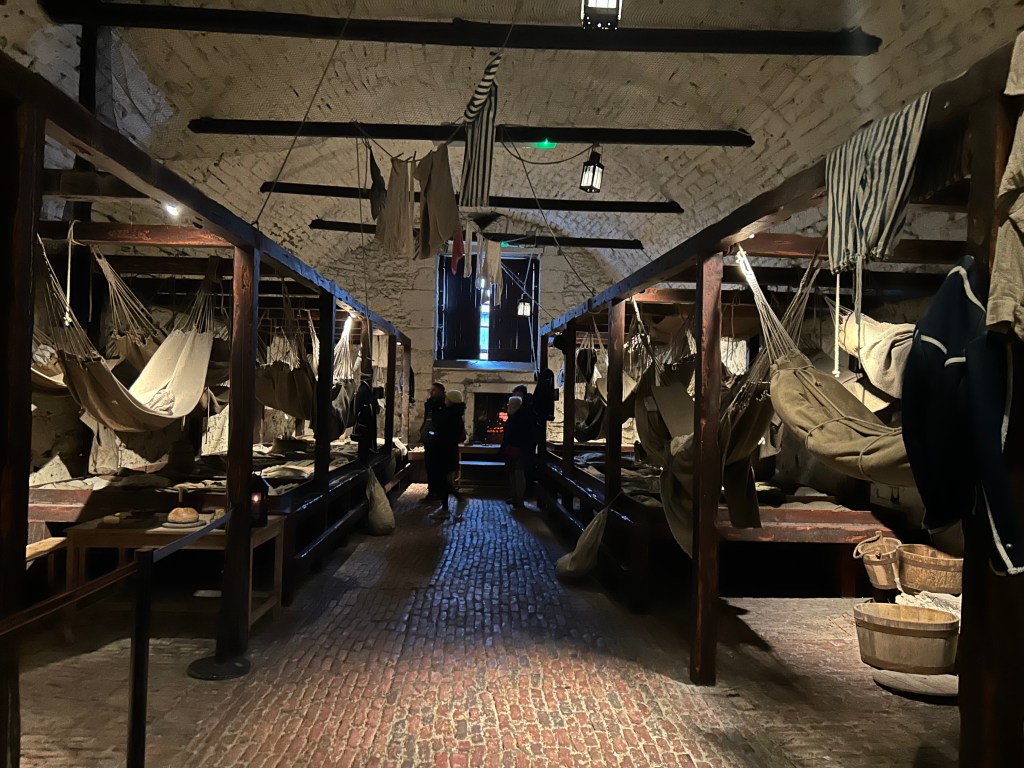
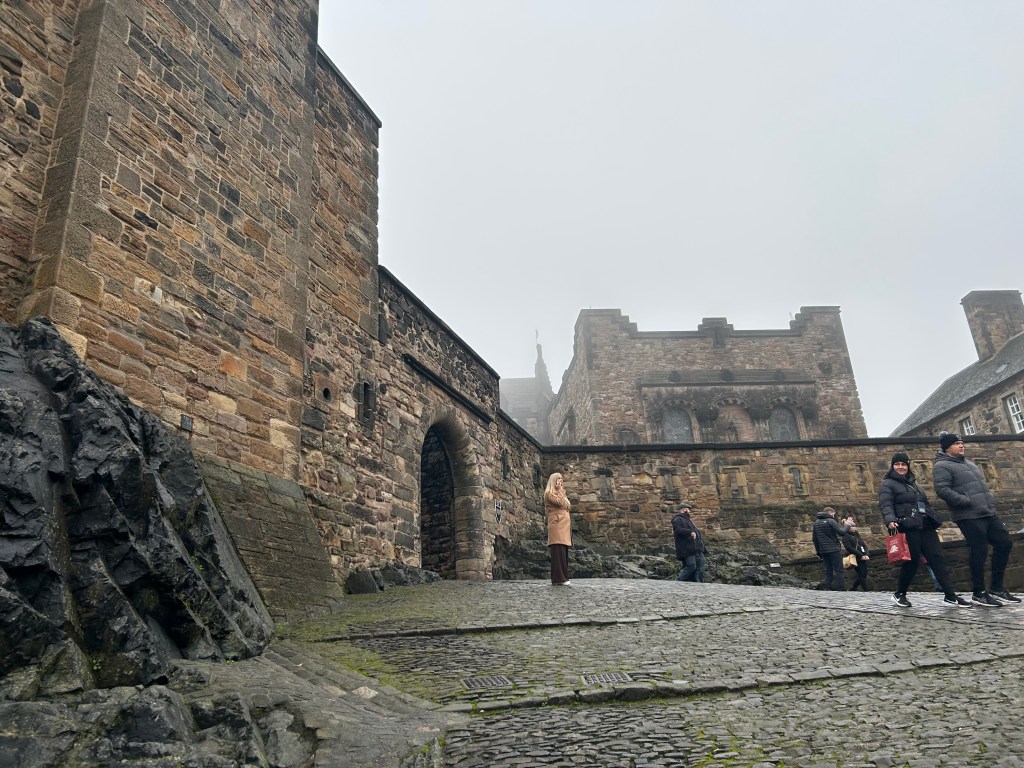
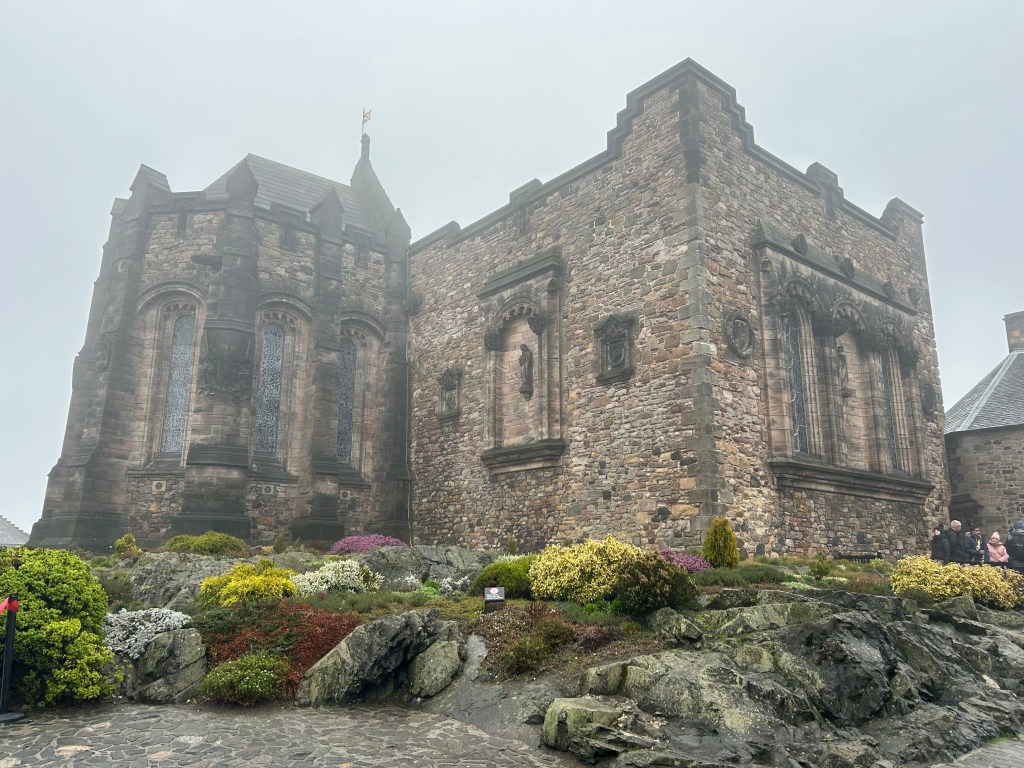
Another exciting adventure from this past week came from exploring Stirling’s own little museum, the Smith Art Gallery!
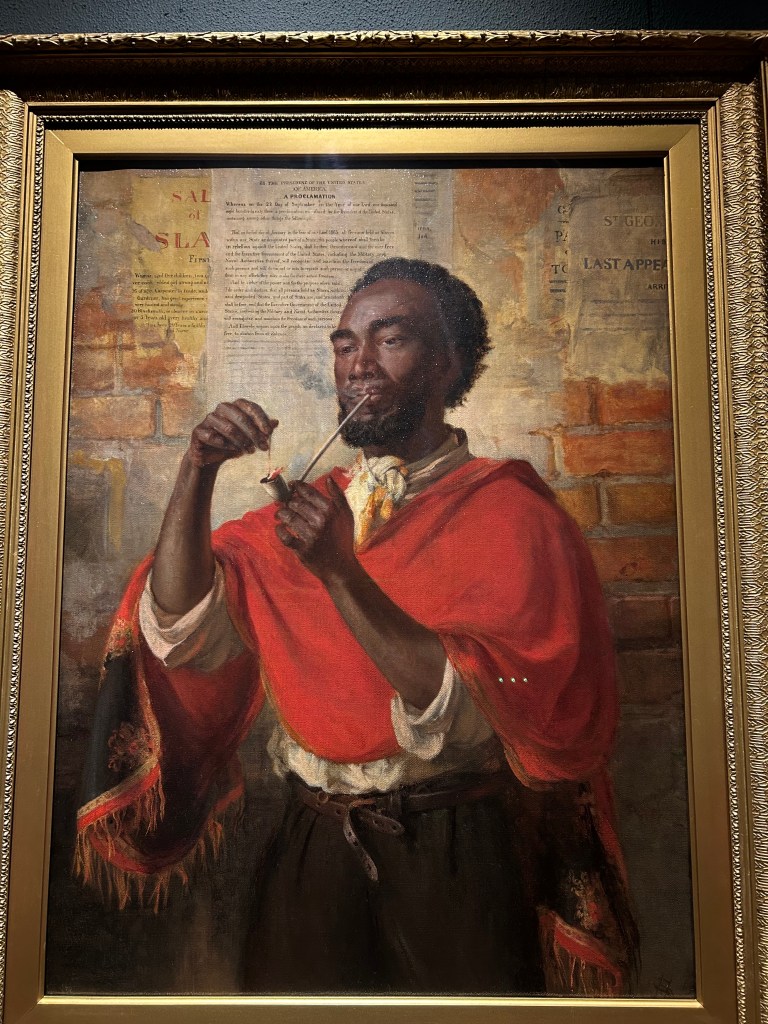
While seeing works from famous names like Van Gogh and Monet at Museums in Glasgow was an incredible experience, I found it was just as fascinating to dive into this smaller, local museum to learn about the less-known figures and artists who really made an impact on Stirling’s own history. The Museum’s namesake, Thomas Stuart Smith, was himself an incredible artist who, crazily enough, is most famous for his series surrounding American Emancipation. It was so interesting to view such a monumental moment in history through the eyes of a non-American, and I found myself lingering near these pieces for quite some time.
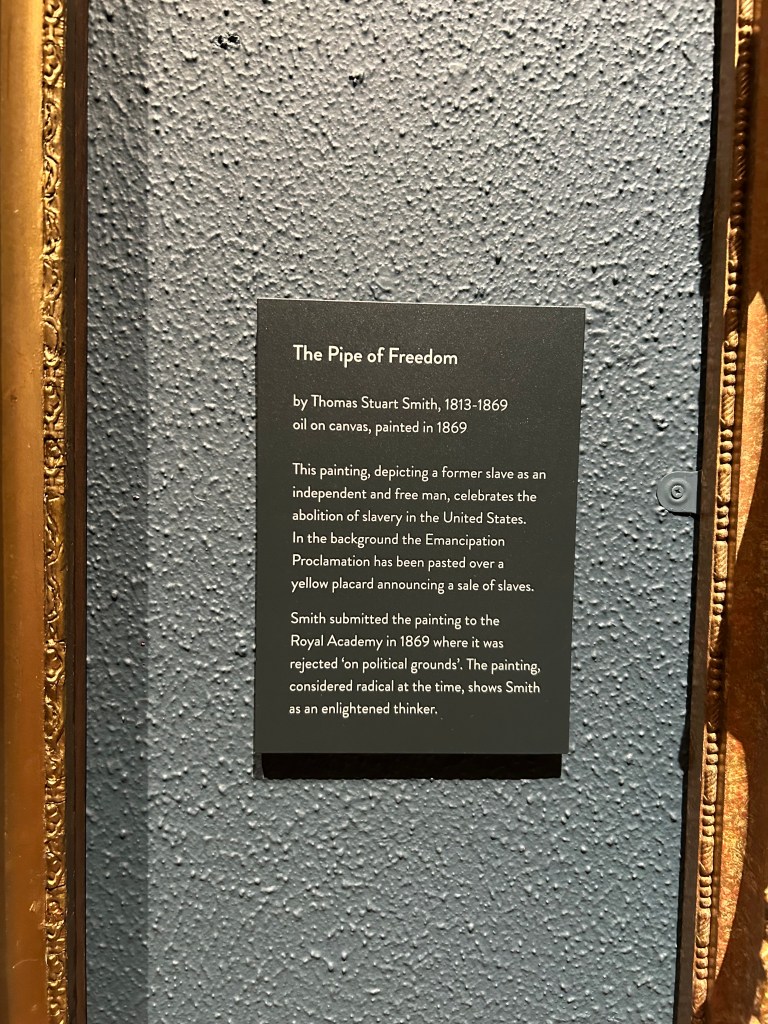
The other standout I found (amongst a whole gallery of gems) was a poem written by one Patrick Hume of Polwarth in the year 1597. I began reading it, not thinking much in particular about the poem, until I realized it was about the King’s Park walk from Stirling Castle to Gowan Hill–the walk near my apartment I wrote about in my last post, and one I have found myself going on repeatedly. Hume writes about the walk with such a passionate admiration, and makes note of certain aspects that I’ve had the pleasure of noting myself. While this walk hasn’t yet inspired in myself an adoration for the King, it is incredible to think about a man, 447 years ago, walking the same path as me and noticing the same beauty, the same nature, the same solitude that has remained across centuries.
History is amazing! Poetry is amazing!

While these next few weeks will require me to focus on more school-related projects and events (I unfortunately must remember that I am still technically a student), I still have some days of travel planned ahead that I’m excited to share with you!
As Hume writes, “So Joy caused the beasts to make busyness”
I feel privileged to be busy these days!
 stirlingscribe
Leave a comment